
How Can You Help Kids Set Goals Without It Feeling Like Homework?
B-012
f you’ve ever tried to talk to kids about goals, you may have seen the look.
You know the one. The same expression they make when someone says the words extra worksheet. But here’s the surprising truth: kids actually love having goals...when the process feels fun, encouraging, and a little bit empowering.
They like the idea of learning something new. They enjoy seeing progress. And they really enjoy celebrating a win.
The trick isn’t forcing goal-setting. The trick is making it feel like part of everyday family life. With a little creativity and about 10 minutes a week—you can help kids build confidence, motivation, and a sense that they’re capable of amazing things.
And the best part? It can happen right on the couch with a bowl of popcorn.
Why Goal Setting Is So Powerful for Kids
Kids are growing fast—physically, emotionally, mentally. One minute they’re asking for help tying their shoes, the next they’re negotiating bedtime like a tiny lawyer.
But during all that growing, kids benefit from learning one simple skill: How to aim for something and take small steps toward it.
Goal setting helps kids:
Build confidence
Learn patience and persistence
Develop planning and problem-solving skills
Feel proud of their progress
Most importantly, it teaches them something powerful: They can shape their own progress.
That realization changes everything. Instead of waiting for success to happen, kids start seeing that their choices and efforts matter. Pretty big life lesson for a short family conversation.
A Simple Weekly Goal-Setting Routine for Families
The good news? You don’t need complicated charts or a color-coded planner. Just a cozy moment and a few thoughtful questions.
Here’s a simple routine many families love.
1. Create a relaxed moment
Goal setting works best when it feels comfortable and natural. Maybe it happens after Sunday dinner. Maybe during Friday pizza night. Maybe while everyone is curled up in the living room.
Hot chocolate helps. Blankets help even more. The goal is simple: make it feel cozy, not serious.
You might even say something playful like: “Alright team, it’s our family goal time.”
Bonus points for dramatic drumrolls. Kids appreciate a little theatrics.
2. Start with a small win
Before talking about goals, start by celebrating something good.
Ask everyone: “What was one win from this week?”
The win can be tiny. Maybe someone finished a book. Maybe they helped a friend. Maybe they remembered their lunchbox two days in a row (which honestly deserves a parade).
Celebrating wins does something important. It reminds kids they’re already making progress.
And when kids notice progress, they become more excited about setting new goals.
3. Ask the magic goal question
Now comes the heart of the conversation.
Ask: “What’s one thing you’d like to try or get better at this week?”
Notice the wording. Not master. Not perfect. Just try.
Kids might say things like:
“I want to learn a new soccer trick.”
“I want to draw more.”
“I want to read before bed.”
If they’re unsure, offer a few ideas.
You could ask:
“Is there something fun you want to learn?”
“Anything you’ve been wanting to make?”
“Is there a skill you want to practice?”
Curiosity opens doors that pressure tends to slam shut.
4. Shrink the goal (this part matters most)
Here’s where many goals fail—not just for kids, but for adults too. The goal starts out too big.
“I want to get better at reading.” Okay… but what does that actually mean? Instead, help kids shrink the goal into something small and clear.
For example:
Read one page each night
Practice the soccer trick three times after school
Draw for 10 minutes before bed
Small goals work because they feel possible. And possible goals lead to action. Think of them like stepping stones across a river. One small step leads naturally to the next.
5. Choose the first step
Now ask one simple follow-up question: “What’s the first thing you can do tomorrow?”
Maybe it’s putting a book on the nightstand. Maybe it’s setting out art supplies. Maybe it’s bringing the soccer ball into the backyard.
When kids picture the first step, the goal suddenly feels real. Some families like writing goals on sticky notes and placing them somewhere visible. Bathroom mirrors work surprisingly well.
6. Celebrate progress next week
When you check in the following week, focus on progress—not perfection.
Maybe the goal happened every day. Maybe it happened twice. Maybe it didn’t happen at all. That’s okay.
Instead of judging the outcome, ask curious questions:
“What helped you remember?”
“What made it tricky?”
“What should we try next?”
Then celebrate any progress that happened. High fives. Silly dances. Victory laps around the kitchen island.
Kids remember those moments far more than the goal itself.
Make Goal Setting Creative and Fun
If kids enjoy the process, they’ll want to keep doing it.
Some fun ideas families love include:
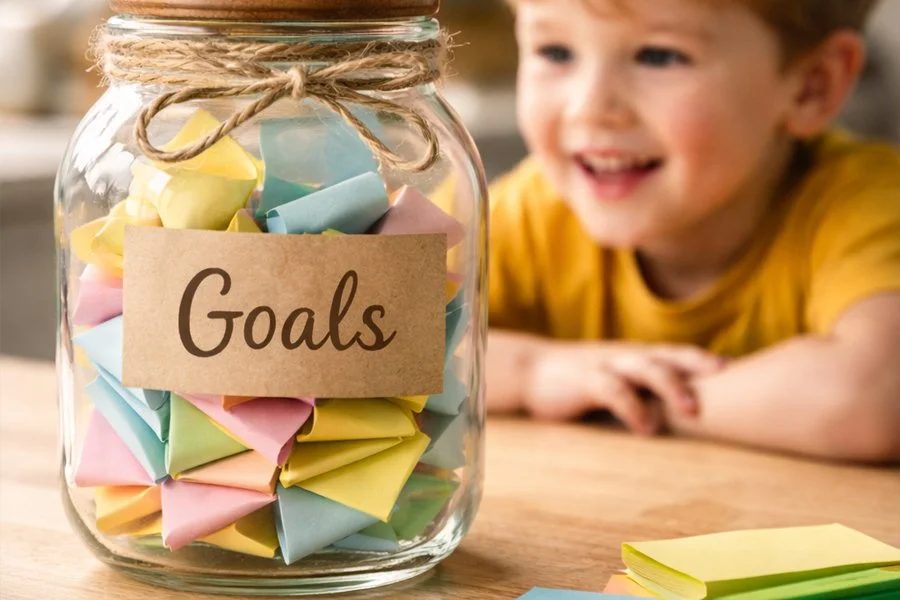
Goal jars Kids write ideas on slips of paper and pull one each week.
Sticker trackers Small steps earn stickers toward a bigger celebration.
Mini vision boards Kids draw pictures of goals they want to try.
A family goal wall Sticky notes go on one side when goals start—and move to the “Victory Side” when they’re finished.
What If Kids Aren’t Interested?
Some nights you might hear the classic response: “I don’t know.”
Translation: “My brain is tired and I’d rather talk about dinosaurs.”
Totally normal. Instead of pushing, try offering choices:
“Would you rather practice a soccer move or draw for ten minutes this week?”
Another common challenge is fear of failing. Kids sometimes avoid goals because they’re worried about messing up. That’s when your stories matter. Tell them about the time you burned dinner. Or messed up a presentation. Or tried yoga and fell over like a wobbly flamingo.
Kids need to hear something important: Trying—and messing up—is part of learning.
The Real Secret to Raising Goal-Setting Kids
Here’s the truth most parents don’t realize. You don’t need a perfect routine. You just need consistency and encouragement.
Maybe your goal chat happens every Sunday. Maybe it happens once every couple of weeks. That’s perfectly fine. What matters most is that kids hear this message again and again:
“You’re capable of learning new things.”
And when children believe that? They become brave enough to try.
Try This Tonight
Tonight, try asking just two questions:
“What was one win from this week?” and
“What’s one small thing you want to try next week?”
Write the answers on a sticky note and put it somewhere visible.
Then check back next week. Celebrate whatever progress happened—even if it’s tiny.
Especially if it’s tiny. Because those small steps? They quietly build something incredible over time:
Confidence.
Resilience.
And kids who believe they can do hard things. Not bad for a ten-minute chat on the couch.
With warmth and inspiration,
Cottage Craft Studio
Ready to bring more inspiration into your routine? Subscribe to our Newsletter.